



The key is Automation

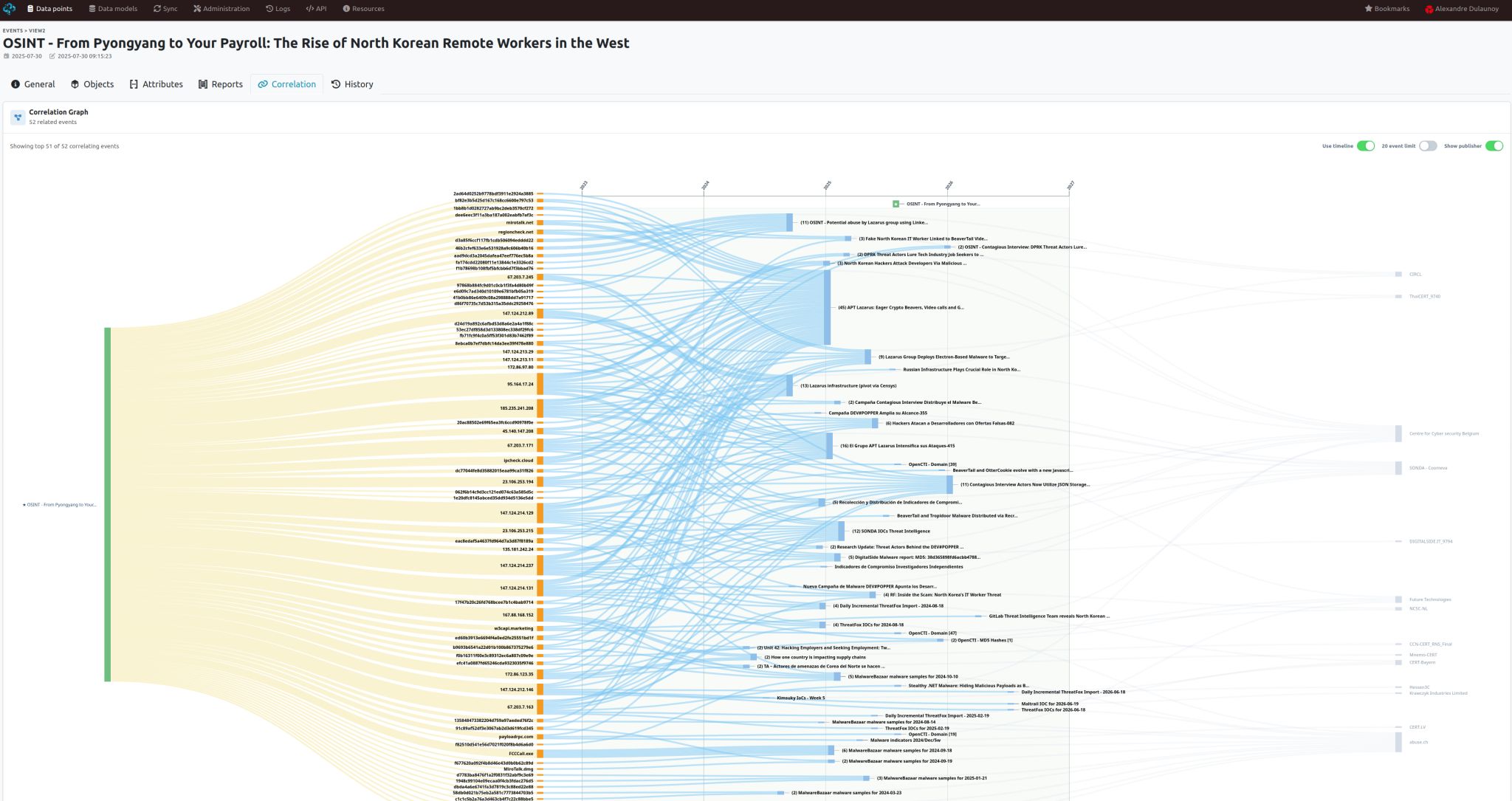
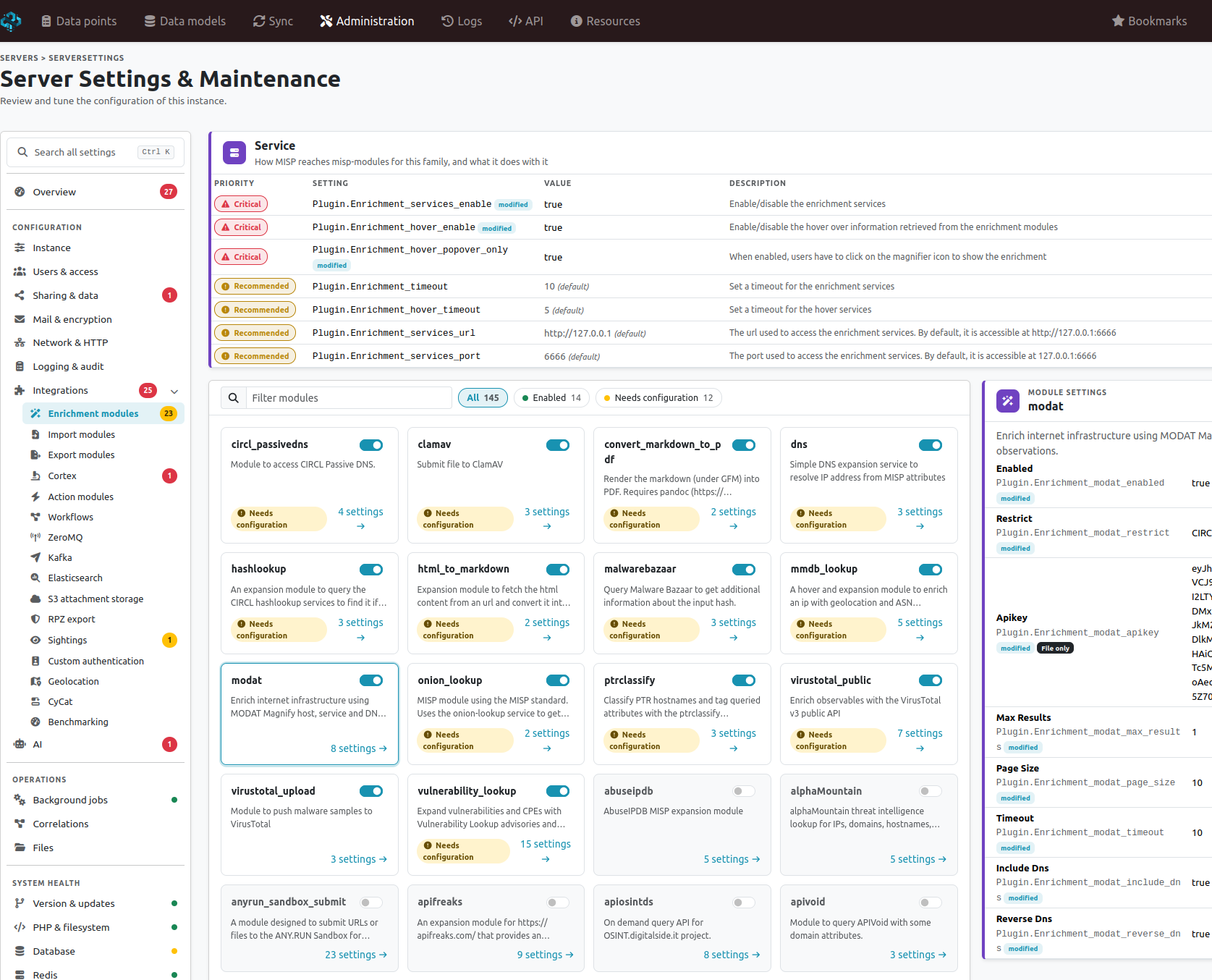
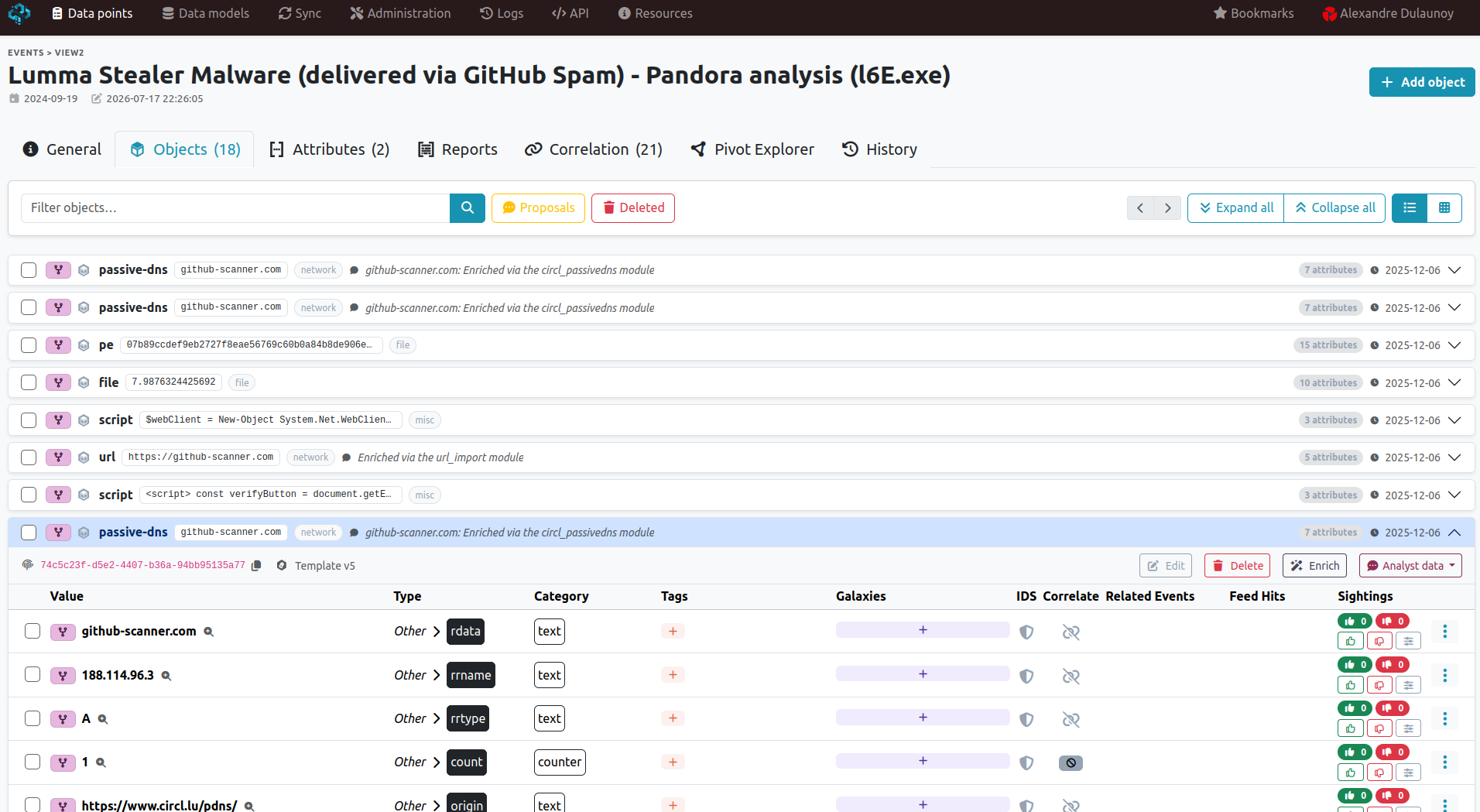
Isn’t it sad to have a lot of data and not use it because it’s too much work? Thanks to MISP you can store your IOCs in a structured manner, and thus enjoy the correlation, automated exports for IDS, or SIEM, in STIX or OpenIOC and synchronize to other MISPs. You can now leverage the value of your data without effort and in an automated manner. Check out MISP features.

Simply Threats

The primary goal of MISP is to be used. This is why simplicity is the driving force behind the project. Storing and especially using information about threats and malware should not be difficult. MISP is there to help you get the maximum out of your data without unmanageable complexity.

By giving you will receive

Sharing is key to fast and effective detection of attacks. Quite often similar organizations are targeted by the same Threat Actor, in the same or different Campaign. MISP will make it easier for you to share with, but also to receive from trusted partners and trust-groups. Sharing also enabled collaborative analysis and prevents you from doing the work someone else already did before.
Join one of the existing MISP communities.

Threat Intelligence

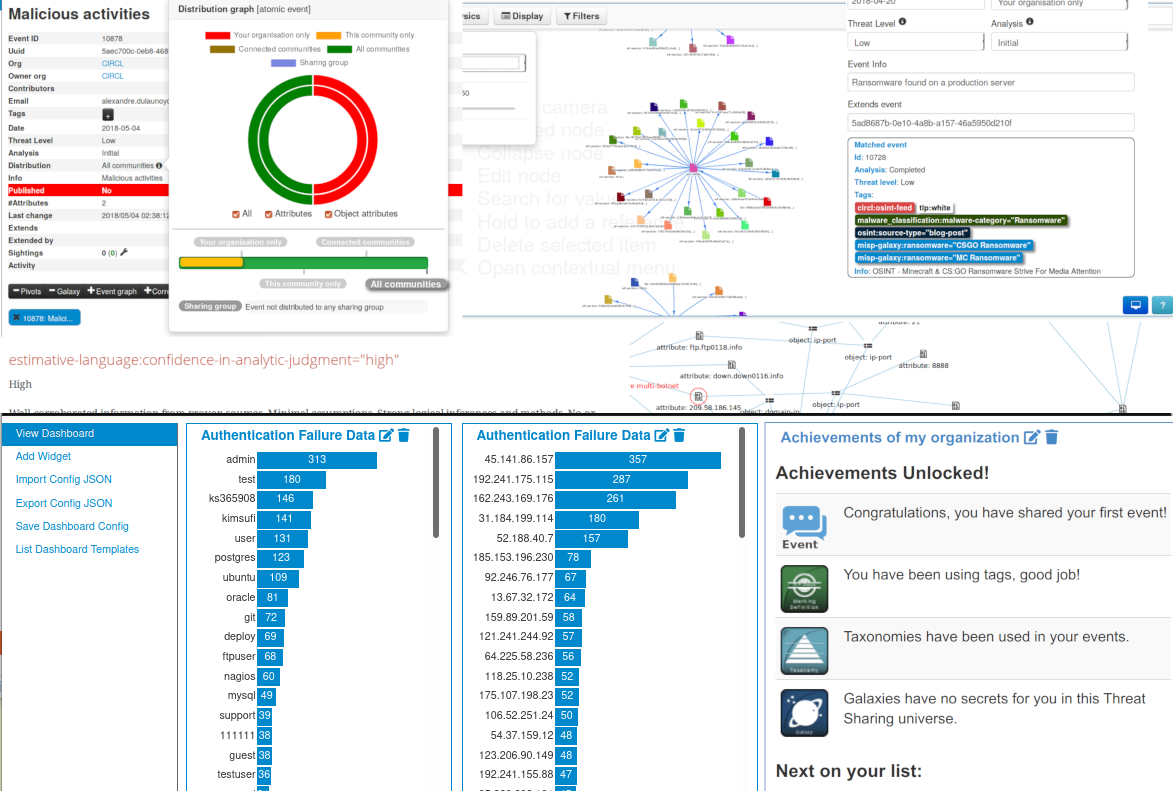
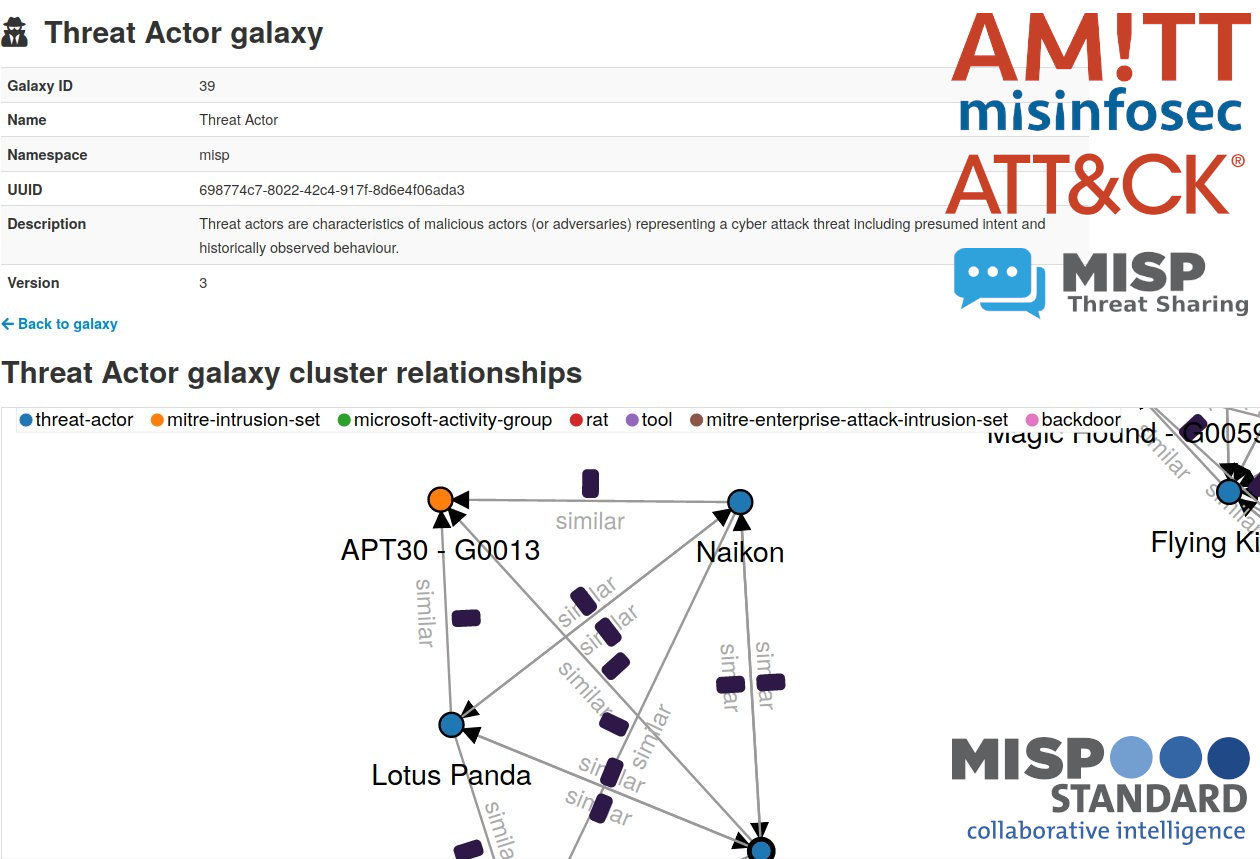
Threat Intelligence is much more than Indicators of Compromise. This is why MISP provides metadata tagging, feeds, visualization and even allows you to integrate with other tools for further analysis thanks to its open protocols and data formats.

Visualization

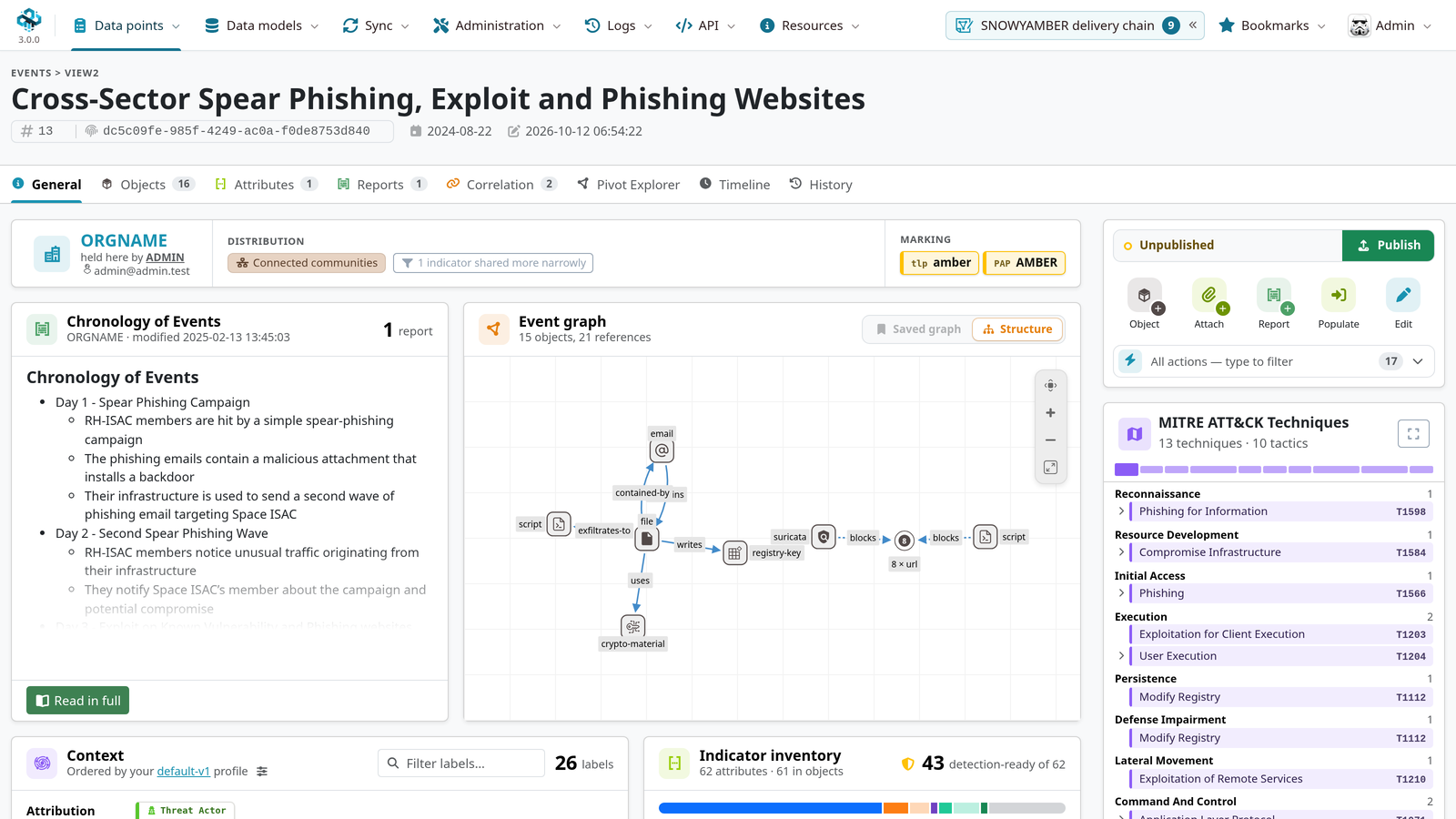
Having access to a large amount of Threat information through MISP Threat Sharing communities gives you outstanding opportunities to aggregate this information and take the process of trying to understand how all this data fits together telling a broader story to the next level. We are transforming technical data or indicators of compromise (IOCs) into cyber threat intelligence. MISP comes with many visualization options helping analysts find the answers they are looking for.

Open & Free

The MISP Threat Sharing ecosystem is all about accessibility and interoperability: The software is free to use, data format and API are completely open standards and for support you can rely on community and professional services.

Want to test and evaluate MISP?

Download now

Initiatives

The MISP Threat Sharing project consists of multiple initiatives, from software to facilitate threat analysis and sharing to freely usable structured Cyber Threat Information and Taxonomies.

Do you want to join a community?

MISP is an open source software and it is also a large community of MISP users creating, maintaining and operating communities of users or organizations sharing information about threats or cyber security indicators worldwide.

Find communities

From our blog

In addition to the news stories below, check out the press, events, hackathon, MISP Summit pages and full news archive.

MISP to Microsoft Sentinel integration with Upload Indicators API

By Koen Van Impe on August 26, 2023

MISP to Microsoft Sentinel integration Introduction The MISP to Microsoft Sentinel integration allows you to upload indicators from MISP to Microsoft Sentinel.

Continue reading

MISP 2.4.175 released with various bugs fixed, improvements and security fixes.

on August 24, 2023

MISP 2.4.175 released with various bugs fixed, improvements and security fixes. Improvements Added support of start_date and end_date options in the MISP dashboard widgets.

Continue reading

MISP now supports Signal Metadata Format Specification SigMF

on August 23, 2023

As one of the outcomes of GeekWeek8, MISP now supports a new set of features useful for handling radio frequency information in the Signal Metadata Format Specification) (SigMF), commonly used in Software Defined Radio (SDR), digital signal processing and data analysis applications.

Continue reading

MISP 2.4.174 released with major workflow enhancements, new features and fixes

on July 31, 2023

We are thrilled to announce the immediate availability of MISP v2.4.174 with significant workflow improvements, accompanied by a host of quality-of-life enhancements and bug fixes.

Continue reading